

Get Legal Advice
(256) 993-5260

Originally published: January 2026 | Reviewed by J. Wesley Atkinson
Buying or selling property in Alabama can be a headache with all the paperwork and scheduling.
You may live out of state, have a packed work calendar, or want some flexibility. That’s when mail-away and remote closings start looking appealing.
Alabama permits mail-away closings, in which documents are shipped to you for wet-ink signing and in-person notarization.
Alabama also has a remote notarization framework that is commonly handled as remote ink-signed notarization (a live video appearance, with wet-ink documents and original document handling).
In practice, most Alabama real estate closings still hinge on which documents must be signed in ink and which notarization formats your lender, title insurer, and county recording office will accept.
Key Takeaways
- Alabama permits mail-away closings but not remote online notarization for real estate transactions.
- You can e-sign some closing documents, but others still require ink signatures and in-person notarization.
- Mail-away closings mean documents are sent to you for signing and return, but your lender, attorney, and transaction type must all approve.
What Mail-Away And Remote Closings Mean In Alabama
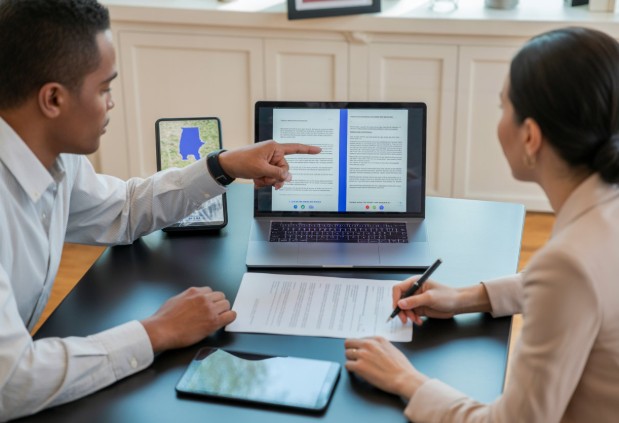
In Alabama, “remote closing” can describe several different processes. A mail-away closing uses paper documents shipped to you for signing and notarization, while other remote methods may use live audio or video for identity verification and notarization. The closing model you can use depends on document type, lender rules, and notarization requirements.
What A Mail-Away Closing Is And When It Is Used
A mail-away closing lets you sign real estate closing documents from wherever you are. Your closing agent preps the documents and ships them to you.
You review everything and sign in front of a local notary. After notarization, return the signed documents to complete the ownership transfer.
This is great if you’ve already moved for work or just live far away. It’s also handy if your schedule is a mess and you can’t make it in person. Mail-away closings are common for out-of-state sellers or investors who can’t be there.
Just keep in mind that mailing documents back and forth adds extra time. You’ll plan to avoid missing your closing date.
What Remote Ink-Signed Notarization Looks Like in Alabama Closings
In Alabama, what many people call a ‘remote closing’ is often handled as remote ink-signed notarization.
You appear before the notary via live audio-video for identity verification and witnessing. Still, the documents are typically signed in wet ink and handled as originals, so they can be recorded and funded without issue.
The closing team coordinates the delivery of the original documents to the notary for notarization, then their return to the title/closing office for funding and recording.
What A Hybrid Closing Is And Why It Is Common In Real Estate
A hybrid closing mixes digital documents with old-school in-person notarization. You sign on a computer or tablet while sitting across from a notary.
This is a nice middle ground if you want the speed of digital but still like meeting someone face-to-face. Your closing agent brings the digital docs wherever works for you. The notary watches you sign on the screen and then stamps it with their seal.
Hybrid closings are popular because not everyone loves full-on video calls. You still get digital storage and quick distribution, but with a human touch.
Closing Types At A Glance
| Closing Type | How Documents Are Signed | Notary Location / Appearance | Best For |
| Mail-Away Closing | Paper documents (wet ink) | In-person with a local notary where the signer is located | Out-of-state sellers/buyers, travel conflicts, tight schedules (with enough lead time for shipping) |
| Alabama Remote Ink-Signed Notarization | Paper documents (wet ink) signed while appearing remotely | Live audio-video appearance before an Alabama notary, with original documents routed for completion of the notarization | Remote parties who need convenience without relying on fully electronic RON; transactions where recorder/lender/title require wet-ink originals |
| Hybrid Closing | Mixed: some e-sign + some wet ink (especially recordable docs) | In-person with a notary (mobile or office) for wet-ink/notarized documents; e-sign completed via portal | Parties who want digital speed for disclosures but still need traditional execution for recordable documents |
| Out-of-State RON (Fully Electronic) | Electronic documents + electronic signatures | Video conference with a notary commissioned in a RON-enabled state (under that state’s law) | Remote parties only when the lender/title/county recording workflow supports acceptance (case-by-case) |
Every closing method needs proper notarization to be legal. Your title company or closing attorney will help you figure out what’s best for your situation.
What Is Allowed In Alabama For Remote Notarization And Closing Signatures
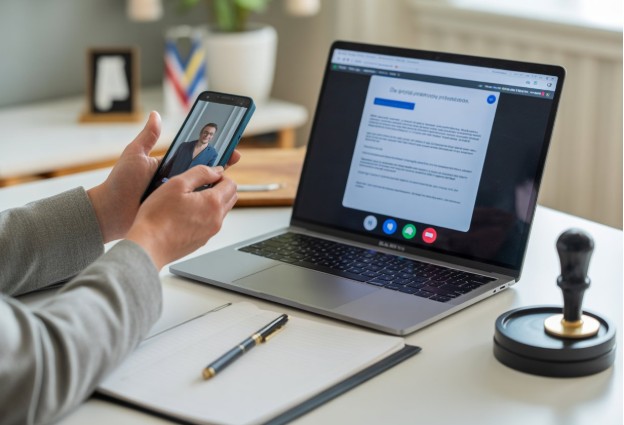
Alabama closings hinge on notarization and recordable documents. Some parts of a closing may be completed remotely. Still, the legality and acceptance depend on Alabama notarization rules and on whether your lender and title requirements allow remote execution for the specific documents involved.
The safest approach is to confirm “allowed and accepted” per the document before the end of the week.
What Alabama Typically Requires For Notarized Real Estate Documents
In Alabama, you usually have to appear in person for a notary to witness you sign real estate documents. The notary verifies your ID and observes you sign on-site.
Many Alabama real estate instruments—especially documents that must be recorded—are commonly handled as wet-ink originals with a traditional notarial certificate and seal.
While some closing documents can be completed electronically, recordable documents and lender/title requirements often require ink signatures and a notarization method accepted by the county.
Important documents such as deeds, mortgages, and powers of attorney require proper notarization before recording. The notary uses their official seal and signs each one.
Most counties in Alabama want traditional, ink-signed documents. Your loan signing agent or closing attorney will ensure that everything meets the requirements before any documents are recorded.
What Remote Notarization Rules Mean In Practical Closing Terms
Alabama notaries can use videoconferencing for acknowledgments. You can appear before a notary via video call instead of in person.
The notary needs technology that lets them see and talk to you live, and verify your identity—either by checking your ID online or asking you some security questions.
You still sign paper documents with a pen while the notary watches on video. That’s why it’s called Remote Ink-Signed Notarization—not fully electronic notarization.
After the live audio-video session, the signed original documents are delivered as instructed so the notary can complete the notarial act on the originals and apply the required notarial certificate, seal, and signature in a way that supports recording.
What Out-Of-State Signing Can Still Allow For Alabama Recording
You can use an out-of-state notary and still record in Alabama. Alabama accepts notarizations performed in accordance with other states’ laws.
If you’re out of state, you can go to a local notary who follows your state’s rules. Or, you can use an Alabama notary who does remote notarizations.
Alabama will accept notarizations performed outside the state when executed in compliance with the laws of the state where the notarization occurs.
Whether a fully electronic out-of-state RON package can be recorded and funded smoothly may still depend on lender/title requirements and the county’s recording workflow.
Your closing team should confirm this early before relying on a fully electronic approach.
Allowed Vs. Commonly Accepted Matrix
| Method | Legally Allowed | Commonly Accepted by County Recorders | Best For |
| Traditional In-Person Notarization (Alabama) | Yes | Yes | Local Alabama residents; transactions where everyone can attend in person |
| Alabama Remote Ink-Signed Notarization (Audio-Video Appearance + Wet-Ink Originals) | Yes | Yes (commonly) | Alabama parties who cannot meet in person; remote signers who still need wet-ink originals for recording |
| Out-of-State Traditional Notarization (Wet Ink + Local Notary) | Yes (if executed per the other state’s law) | Yes (commonly) | Buyers/sellers located outside Alabama, using a local notary where they are |
| Out-of-State RON (Fully Electronic) | Often depends on the law of the place of notarization | Varies by lender/title/county recording workflow | Remote parties in RON-enabled states only when the transaction’s recording and funding requirements support a fully electronic package |
| Mail-Away Closing (Wet-Ink Signing + Local Notary at Signing) | Yes | Yes (commonly) | Distance closings with document shipping; out-of-state parties with enough lead time for delivery and review |
Not every county in Alabama treats electronic documents the same way. Some will only take paper with real ink signatures and a notary seal.
It’s smart to check with your county recorder before picking a notarization method. Usually, your title company or closing attorney will handle this part.
Remote Ink-Signed Notarization is usually the safest bet for remote closings in Alabama. It keeps things convenient without upsetting any recording offices—everyone’s happy.
Atkinson Law, P.C. can coordinate your Alabama mail-away or remote ink closing—documents, notarization, shipping, and deadlines. Call or text (256) 993-5260 today.
If you’re ready to get started, call us now!
How A Mail-Away Closing Works Step By Step
A mail-away closing means your title company sends the documents to you, you sign them with a notary, and then you return the originals by mail before the deadline. Planning and following each step closely keeps your closing date on track.
How To Request A Mail-Away Closing Early Enough To Avoid Delays
Contact your closing agent as soon as you realize you can’t attend the closing in person. Most title companies require 7 to 10 business days to prepare and mail your documents.
Submit your mail-away closing request in writing to ensure you have a clear record of when you requested it. Ask your closing agent about their specific requirements and cutoff dates—some companies have their own rules about how much notice they need.
Please consider the mailing time when submitting your request. If you’re on the other side of the country, it could take 3 to 5 business days for documents to reach you.
Your closing agent will need to coordinate with the other party and your lender. If you communicate early, you help everyone avoid last-minute headaches.
Check with your lender to see if they allow mail-away closings. Some lenders insist buyers sign certain documents in person, which could limit your options.
What Documents Are Typically Included In A Mail-Away Closing Packet
Your mail-away closing packet includes all the legal documents needed to transfer the property. The exact contents depend on whether you’re the buyer or the seller.
Common documents for buyers include:
- Deed (warranty deed or quitclaim deed)
- Settlement statement or closing disclosure
- Loan documents (if financing)
- Affidavits and disclosures
- Power of attorney forms (if applicable)
Common documents for sellers include:
- Deed
- Settlement statement
- Seller’s affidavit
- Property disclosures
- Lien releases or payoff statements
The title company sends signing instructions with your packet. You’ll see exactly where to sign, initial, and date each page.
Some pages require notarization; others only require your signature. It’s not always obvious, so read the instructions carefully.
How To Sign And Notarize The Packet Correctly The First Time
Read all the signing instructions before you start. You need to sign documents requiring notarization in front of a notary, so don’t sign them early.
Bring a government-issued photo ID to your notary appointment. A driver’s license or passport usually works fine, but double-check that your name exactly matches your closing documents.
During signing, follow these steps:
- Review each document while the notary is present
- Sign only the documents marked for notarization, with the notary watching
- Let the notary handle their stamps and seals
- Sign any other documents that don’t require notarization
- Go back and double-check that you signed and dated every spot you needed to
Don’t leave any required fields blank. If you make a mistake, call your closing agent—sometimes you need new documents, sometimes you can just initial the correction.
Missing signatures or incorrect notarization require the title company to send new paperwork, delaying the process.
How To Return Original Documents Safely And Confirm Receipt
Ship your signed documents with a trackable service right after notarization. Use UPS or FedEx with overnight or 2-day delivery to ensure prompt arrival.
Make copies of every signed document before mailing. Take photos or use a copier—just in case something gets lost along the way.
Shipping best practices:
- Pick a sturdy envelope or small box
- Ask for signature confirmation at delivery
- Insure the package for at least $100
- Write “Time-Sensitive Legal Documents” on the outside
- Double-check the address your closing agent gave you
Keep your tracking number and monitor the delivery status. As soon as the package shows delivered, call your closing agent to confirm they got everything.
Ask if anything needs fixing or if they need more from you. Don’t use regular mail to close documents—the risk is too high.
Mail-Away Closing Timeline And Buffer Plan
A typical mail-away closing takes about 10 to 14 business days from start to finish. That covers document preparation, bi-directional mailing, and processing at the title company.
Build in extra time for your closing date. Weather, notary schedules, or document mistakes can slow things down.
Adding 3 to 5 buffer days helps you avoid missing your closing appointment. It’s not fun to scramble at the last minute.
Sample timeline:
| Day | Activity |
| 1-2 | The title company prepares documents |
| 3-5 | Documents in transit to you |
| 6-7 | You sign and notarize documents |
| 7-9 | Documents in transit back to the title company |
| 10 | Title company reviews and processes |
Your closing agent might ask you to overnight the documents if things are running tight. It’s more expensive but gets your paperwork there fast.
Plan for that extra cost in your budget. If delays pop up on your end, let your closing agent know right away—they might be able to adjust the date or come up with a workaround.
How Alabama Remote Ink-Signed Notarization Works Step by Step
Some remote closing formats use live audio-video interaction for identity verification and notarization. Even then, real estate closings often require strict handling of original documents and specific notarization language.
Your closing team should confirm the remote process is compliant and acceptable for your transaction type, lender, and county recording requirements.
What You Need Before A Remote Notarization Session
You’ll need a reliable internet connection and a device with a camera and a mic. A computer, tablet, or even your phone can work.
The notary platform typically requires you to verify your identity before the session. That often means uploading a government-issued photo ID, such as your driver’s license or passport.
Some platforms ask knowledge-based authentication questions—such as information from your credit history or public records—to verify it’s really you.
Review your closing documents before the session. Make sure you know what you’re signing and jot down any questions for the notary or closing agent.
Test your device’s camera and mic ahead of time. A poor connection can really disrupt things during the live session.
What Happens During The Live Remote Notarization Session
At your scheduled appointment time, you’ll connect with the notary via a secure video platform. The notary checks your ID on camera and compares it to your face.
They walk you through each document that needs your signature. If you hit a confusing section or weird legalese, just ask—better safe than sorry.
During the live audio-video session, the notary verifies your identity and witnesses you execute the documents in the required format.
For many real estate instruments, that means wet-ink signing on paper while the notary observes remotely. The closing team then coordinates delivery of the signed originals so the notary can complete the notarization and the title/closing office can finalize funding and recording.
What Happens After The Session To Finalize And Deliver Documents
The notarized documents are saved in a secure digital format immediately after you’re done. You’ll get copies through the platform or by email.
The title company or lender receives the finalized docs electronically. This speeds things up a lot compared to mailing paper back and forth.
The notary keeps the session recording and the required digital records. Alabama might have its own retention rules here.
Download and save all your closing documents in a safe place. It’s smart to keep both digital and printed copies, just in case.
The lender usually funds your loan within a day or two after getting the notarized documents. You’ll get a confirmation when everything’s wrapped up.
When Remote Notarization Is A Better Option Than Mail-Away
Remote notarization really shines when you need to close fast. Remote closings can shave a week off your timeline compared to mailing documents.
If you have questions about your documents, go remote. You can ask the notary live instead of waiting for emails or calls.
Remote notarization also provides better security. The ID checks and session recording create a stronger legal trail than mailing papers.
If you’re far from the property or the closing office, remote notarization saves you time and money—no need to take time off work or book a flight.
Remote sessions also work great if your schedule’s tight. You can often book them in the evening or on weekends, which isn’t possible with in-person closings.
Remote Session Readiness Checklist
Technology Requirements:
- Technology: device + camera/mic + stable internet for the live session
- Documents: ability to access/print documents if required; blue/black ink; copies for your records
- Shipping: trackable overnight shipping plan; cutoff times; label ready; secure envelope/box
- Notary coordination: confirm notary’s completion process and where originals must be delivered
- Backup plan: what happens if a page is missed or a certificate must be corrected
Documents and Identification:
- Valid government-issued photo ID (driver’s license or passport)
- Any pre-closing docs you want to look over
- Payment info, if there are any fees
Environment Setup:
- Quiet room with no interruptions or background noise
- Good lighting so the notary can see you
- Clean background on camera
- Privacy for financial discussions
Pre-Session Actions:
- Test your camera, mic, and internet speed
- Review your closing documents ahead of time
- Write down questions for the notary
- Log in to the session five minutes early
Which Documents Can Be E-Signed, and Which Usually Require Wet Ink
Even if e-signatures are legally valid in many contexts, real estate closings often involve recordable instruments and lender/title standards that still require wet signatures and notarization in specific formats.
The most reliable remote closing plan classifies documents into “e-sign OK,” “wet sign required,” and “wet sign + notarization required” well before closing.
Which Closing Documents Are Commonly Safe For Electronic Signature
Your closing disclosure usually gets signed electronically because it’s a federal form and doesn’t need to be recorded with the county. The three-day waiting period before closing still applies whether you sign digitally or on paper.
Many loan documents in your mortgage package accept electronic signatures. Your promissory note—listing the loan amount and terms—can often be e-signed if your lender’s on board.
The purchase agreement between you and the seller typically permits e-signatures because it’s a contract between the parties. Your settlement statement and other disclosures rarely need wet ink, since they’re not recorded with the county.
Most business agreements permit electronic signatures unless the law requires originals. Some lenders offer a hybrid closing, where you e-sign certain documents before the big day.
Which Closing Documents Commonly Require Wet Signatures And Notarization
Your deed needs a wet signature in Alabama because it transfers property title and must be recorded with the county.
The deed is recorded in the public records and shows you own the property, plain and simple.
Real estate transactions, such as deeds and mortgage contracts, often require ink signatures, especially for filing with government offices.
Your deed of trust or mortgage document, which secures the loan on your property, usually requires notarization in wet ink.
Alabama counties generally want original signatures on recorded documents.
A notary public must witness your signature on the deed and verify your ID in person. The notary’s seal and signature must be original as well.
Any document requiring county recording almost always demands wet ink.
Some lenders are picky and require original signatures on additional loan documents, even when e-signatures would suffice.
Why County Recording And Lender Overlays Change The Answer
County recording offices in Alabama aren’t all on the same page with technology.
Some counties accept electronically signed and notarized documents, but others require original wet signatures on recorded papers.
Your lender may require wet signatures for documents that can be e-signed. These lender overlays are just internal rules that go beyond the law.
For example, a lender may require an original signature on your promissory note, even though electronic signatures are legally binding.
Recording requirements hit your deed and deed of trust the hardest. If your county clerk’s office only takes paper documents with original signatures, you need wet ink, no matter what state law says.
Electronic closings vary by mortgage transaction, depending on whether the documents are digital.
Some Alabama counties are getting with the times and accepting electronic recordings, but many still rely on paper.
Your title search and property title work happen before closing. Still, the final recorded deed must absolutely meet county standards.
Check with your county recording office early so you know what they want—no surprises later.
Document-By-Document Signing Guide
Documents That Usually Accept E-Signatures:
- Closing disclosure
- Initial loan application
- Purchase agreement (if all parties agree)
- Seller’s disclosure forms
- Pre-closing authorizations
- Credit authorization forms
Documents That Typically Need Wet Ink:
- Warranty deed or quitclaim deed
- Deed of trust or mortgage
- Affidavits requiring notarization
- Power of attorney forms
- Documents are being recorded with the county
Your specific closing may vary based on your lender’s requirements and your county’s policies.
Some lenders offer hybrid closings. You e-sign the disclosure documents in advance, but sign the deed and mortgage with wet ink at closing.
The difference matters for mail-away and remote closings.
You can handle e-signable documents from anywhere, but wet signature documents require an in-person meeting or a mobile notary to come to you.
Need a compliant closing plan fast? We’ll map lender requirements, county recording, and signing logistics with Atkinson Law, P.C.—schedule a consultation now.
If you’re ready to get started, call us now!
Who Can Use A Mail-Away Or Remote Closing, and Common Reasons It Gets Rejected
Not everyone can use a mail-away or remote closing, and even if it seems like a good fit, lenders or title companies may decline.
Your ability to close remotely depends on your lender’s rules, the property type, and whether your situation checks the right boxes.
When Remote Or Mail-Away Closings Usually Work Well
Mail-away closings work best for sellers who have relocated to another state for work and can’t travel back for closing.
If you’re an out-of-state buyer picking up investment property in Alabama, your lender may approve a remote closing since you won’t be living there full-time.
Buyers and sellers who’ve done this before usually have an easier time getting approval.
Your real estate agent can coordinate with the title company to send the documents to you for signing and notarization.
Active military members stationed outside Alabama often qualify for mail-away closings. Lenders and title companies get that service obligations make in-person closings tough or impossible.
Cash deals without a mortgage are usually the easiest to close remotely. No lender means fewer hoops to jump through.
When Remote Or Mail-Away Closings Commonly Do Not Work
First-time homebuyers face higher risks with remote closings and are often denied by their lenders.
Many lenders prefer first-time buyers to attend closing in person so someone can walk them through each document.
Complex deals involving many parties or contract contingencies rarely qualify for remote handling.
Your lender might decline if the property has title issues, liens, or unusual contract terms that need a quick explanation.
FHA and VA loans come with stricter closing requirements than conventional loans. Your lender may require you to appear in person, even if you’ve bought before.
Some Alabama counties have recording rules that make mail-away closings a headache.
Your attorney should double-check whether your county clerk’s office accepts remotely notarized documents before you proceed.
What To Confirm With Your Lender And Closing Team Up Front
Ask your lender in writing if they allow remote or mail-away closings for your loan type. Get their answer before you plan to be out of state.
Your real estate agent should check with the title company to determine whether Alabama law permits your preferred closing method. Title companies don’t all follow the same rules for accepting documents signed elsewhere.
Ask your attorney if your county accepts remote online notarization or only old-school mail-away closings with wet signatures.
This difference can affect your timeline and costs, so get it clarified early.
Ask about backup plans in case items are lost in transit or a signature is missing. Your closing team should walk you through the timeline from start to finish.
Key questions to ask:
- Does my lender allow remote closings for this property type?
- What notarization method does the title company accept?
- How many days before closing must I receive documents?
- Who pays for overnight shipping and mobile notary fees?
- What happens if documents arrive damaged or incomplete?
Costs, Timing, And The Most Common Delay Points
Remote and mail-away closings tack on extra fees and timing challenges.
If you know about these costs and plan a few weeks in advance, you’ll avoid mistakes that require re-signing or delay your closing.
What Additional Fees To Expect With Mail-Away And Remote Closings
You’ll incur additional fees beyond standard closing costs for mail-away or remote closings.
Remote and mail-away closings can add costs such as overnight shipping, mobile notary travel fees, and administrative handling.
The amount varies by provider, urgency, and location, so ask your closing team for a written estimate early—especially if you are working against a firm closing date.
What Mistakes Most Often Cause Re-Signing Or Re-Shipping
Missing signature lines or initials are the main cause of headaches that force re-signing.
You must sign and initial every field on your closing documents. Miss just one, and you’re shipping a corrected page or whole set back again.
Notary mistakes are another big one. Your notary must watch you sign, verify your ID, and correctly complete their certificate.
An expired notary commission or a missing seal makes your documents worthless.
Using the wrong ink color can result in document rejection by some title companies. Stick to blue or black ink unless they tell you otherwise.
Pencil marks or erasures? Those mean new documents, every time.
Incorrectly dating documents creates title insurance problems. Sign on the date shown, or leave it blank if told. Your title company will advise you on dates.
Delay Points And Fixes
Document transit time is the main cause of mail-away closing delays.
Use overnight shipping with tracking for every document package. Request a signature confirmation to confirm exactly when your paperwork reaches the title company.
Lender delays push back plenty of closings. Your lender must send the final numbers and loan documents to the title company before you can sign.
Stay in touch with your loan officer during the week leading up to closing.
Title report issues arise when the title search identifies liens, judgments, or ownership questions. You have to clear these before closing.
Your earnest money will remain in escrow while you resolve title issues, and your closing date will be delayed.
Funding delays happen when lenders don’t wire money on time. The title company can’t complete your closing until your loan funds are in escrow.
Wire transfers usually process the same day, but banks don’t all move at the same speed.
| Delay Type | Typical Impact | Your Action |
| Shipping delays | 1-3 days | Use overnight shipping with tracking |
| Missing signatures | 2-5 days | Review documents carefully before returning |
| Notary errors | 3-7 days | Verify notary credentials beforehand |
| Lender funding | 1-2 days | Confirm wire details with the title company |
Fraud Prevention For Remote Closings
Remote closings come with their own set of security headaches. You need to verify wire instructions, confirm identities, and keep documents locked down to protect your deal from fraudsters.
How To Prevent Wire Fraud During A Remote Closing
Wire fraud is a huge threat in remote real estate deals. Criminals send fake emails that look legit—like they’re from your title company or attorney—with phony wiring instructions.
Never trust wire instructions sent by email alone. Always call your title company or closing attorney using a number you find yourself, not one from an email.
Double-check all account and routing numbers before sending money.
Real estate attorneys recommend using fraud disclosure statements in every email about your closing.
Ask your closing professional to confirm wire details through a separate, verified channel.
If you can, send a small test wire first. This lets you verify the account is correct before sending the large amount.
If anything feels off—timing, instructions, or even the tone of an email—stop and recheck everything before you send a dime.
How To Verify Identity And Notary Credentials Safely
Identity verification is the most important step in fraud prevention for remote closings. You need to confirm that all parties signing documents are who they claim to be.
Ask everyone involved to show government-issued photo identification. The notary should verify these IDs closely and compare the photos to the signatories.
Some title companies use video calls to verify identities in real time. This adds another layer of confidence, especially when you can’t be there in person.
Before you sign anything, check your notary’s credentials. Make sure their commission is current and valid in your state.
You can usually look this up on your state’s notary registry or the secretary of state’s website. Don’t hesitate to double-check—better safe than sorry.
New threats like deepfake videos and synthetic identities are becoming more common. If anything feels off about the identification process or the notary seems unsure, ask questions immediately.
How To Use Secure Document Delivery And Access Controls
Digital closing platforms reduce the risk of fraud and errors when documents are handled electronically. Secure systems protect against document loss, tampering, and unauthorized access.
Use password-protected platforms for document delivery instead of regular email attachments. Your title company should set up a secure portal for you to review and sign documents.
These systems usually track who accessed files and when. That kind of transparency can be reassuring.
Never click links in unexpected emails claiming to have closing documents. Instead, enter your secure portal’s web address manually.
Enable two-factor authentication if your platform offers it. That extra step is worth the trouble for peace of mind.
Look over all documents carefully before you sign. Double-check names, addresses, loan amounts, and other details to ensure everything matches your expectations.
If you spot any problems, contact your closing professional immediately. Don’t move forward until you’re sure everything’s correct.
Remote Closing Checklists For Buyers, Sellers, And Agents
Each party in a remote closing has specific tasks to handle before signing day. Buyers need to verify their identity and tech setup, sellers must gather their documents, and agents coordinate everything to keep things moving.
Buyer Checklist For A Mail-Away Or Remote Closing In Alabama
First, confirm your lender has approved remote closing. Don’t skip this—some lenders have strict rules.
Contact your title company at least 2 weeks in advance to discuss their remote options and requirements. It never hurts to be early.
Confirm with your closing attorney/title company which notarization method and document formats will be accepted for recording and funding in your transaction. County recording workflows and lender/title requirements often drive what is workable in practice.
Make sure your government-issued ID is current. The notary will need to see it during the video call.
Test your computer, tablet, or phone to ensure the camera and microphone work. You’ll need a stable internet connection for the video notarization session.
Download any required software or apps from your title company at least 48 hours before closing. Don’t wait until the last minute—tech issues can be a pain.
Arrange for your closing funds to be wired to the title company. Never send money based on wire instructions sent via email without first calling your title company directly at a verified number to confirm the details.
Seller Checklist For A Mail-Away Or Remote Closing In Alabama
Gather all property-related documents, like warranties, HOA info, and records of recent repairs. Have your driver’s license or passport ready for identity verification during remote notarization.
Work with your real estate agent to schedule the remote closing for a time when you’ll have a quiet, well-lit space. The notary needs to see you clearly on camera, so avoid distractions.
Confirm your forwarding address with the title company. That way, they can send any remaining documents or funds after closing.
Set up mail forwarding with the post office to catch any delayed correspondence. It’s a small step, but it saves headaches later.
Review the settlement statement before closing day. Make sure all the numbers line up with your expectations.
If you’re confused about any charges or credits, ask your agent or attorney to explain. Clear up any outstanding utility bills or property taxes that could delay the closing.
Agent Checklist For Coordinating A Remote Closing Smoothly
First, check with the title company to make sure they offer remote closing services. Don’t promise this option to your clients until you’re sure.
Confirm that all parties have the required technology and internet access for a remote closing. Not everyone’s setup is the same—better to find out early.
Schedule a pre-closing call with your buyer or seller. Walk them through the process, step by step.
Send a list of required documents and explain what to expect during the video notarization session. People appreciate knowing what’s coming.
Coordinate with the lender, title company, and other agents to get all documents prepared in advance. Follow up to ensure the title company has received and verified the wire transfers.
Stay available on closing day to help with any technical issues or last-minute questions. Keep everyone updated on the status of document signing and recording.
After closing, check in with your clients to confirm they received all final documents. Answer any lingering questions about the remote closing process. Sometimes, a quick call makes all the difference.
One-Page Checklist Summary
For Buyers:
- Ask your lender if they allow remote closings.
- Make sure your government ID is up to date.
- Test your camera, microphone, and internet connection in advance.
- Download any apps you’ll need at least 48 hours before closing.
- Call to verify wire instructions—don’t just trust an email.
For Sellers:
- Collect property documents and any warranties you have.
- Have a valid ID ready for notarization.
- Pick a quiet, well-lit spot for the closing appointment.
- Update your forwarding address so nothing gets lost.
- Review the settlement statement before the closing date.
For Agents:
- Double-check that the title company can handle remote closings.
- Ensure your client’s tech setup supports video calls.
- Set up a pre-closing walkthrough call with your client.
- Work with everyone to nail down the timing.
- Stay available on closing day in case someone needs you.
Closing from out of state? Avoid re-signs and delays—get a remote or mail-away strategy built for Alabama—call (256) 993-5260 at Atkinson Law, P.C.
Contact Us Today For An Appointment
Frequently Asked Questions
Are mail-away closings allowed in Alabama?
Yes. Alabama closings can be handled by mail-away: the closing team ships a paper package, you sign and notarize with a local notary where you are, then return originals for funding and recording.
Can I do a 100% digital RON closing in Alabama?
A 100% digital RON-style closing is not the default in Alabama. Many transactions still require wet-ink originals for recordable documents, and lender/title/county workflows may not accept a fully electronic package.
What is Alabama remote ink-signed notarization (and how is it different from RON)?
Remote ink-signature notarization uses live audio and video so the notary can verify your identity and witness the signing, while you typically sign on paper in wet ink. The signed originals are then routed to the notary for notarization.
If I’m out of state, can I sign with a local notary and still have the document recorded in Alabama?
Often, yes. You can usually notarize documents where you are with a notary commissioned in that state, and Alabama may record them if executed properly. Confirm requirements early, as title insurers, lenders, and county offices may impose stricter rules.
Which closing documents in Alabama usually require wet signatures?
Documents that must be recorded—such as deeds and many mortgages—typically require wet-ink signatures and a proper notarial certificate/seal. Non-recorded forms (many disclosures and authorizations) are more likely to be e-signed, subject to lender policy.
How long does a mail-away closing take, and what typically delays it?
Mail-away closings often take longer because documents must be prepared, shipped, signed, notarized, and returned. Delays usually come from lender document timing, shipping cutoffs, or notary/signature errors—so request mail-away early and use tracked overnight delivery.
How do I reduce fraud risk in a remote or mail-away closing?
Never rely on emailed wire instructions. Call your title company or closing attorney using a verified phone number, confirm account details verbally, and use secure portals for documents. Treat last-minute wiring changes as red flags.