

Get Legal Advice
(256) 993-5260
Ejectment vs. Eviction in Alabama:
Originally published: February 2026 | Reviewed by J. Wesley Atkinson
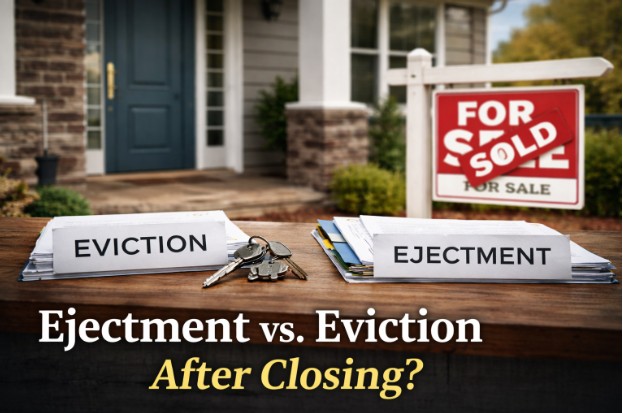
Closed on a property in Alabama, but someone won’t leave? Whether you need ejectment or eviction depends on the occupant’s legal status—not your frustration level.
A holdover seller, an unauthorized occupant, and a tenant each trigger a different legal path, different courts, and different timelines.
Choosing the wrong one can delay possession, trigger lender issues, and increase legal costs.
Ejectment is a civil action used to recover possession from someone who claims a right to possess or own the property, or whose right to remain is not based on a landlord–tenant relationship.
Eviction (unlawful detainer) generally applies when a landlord–tenant or other permission-based right to possession exists, even if there is no written lease.
Maybe you’re dealing with a holdover seller who didn’t move out after closing, a squatter who showed up uninvited, or someone claiming tenant rights.
Alabama property law makes you pick the right legal route. Your property rights—and how quickly you get your place back—depend on understanding the relationship and following the right court process.
Key Takeaways
- Eviction (unlawful detainer) usually applies when a landlord–tenant relationship exists.
- Ejectment is typically used to recover property from someone claiming a right to possession or ownership.
- Holdover sellers often require ejectment, not a standard eviction.
- Lenders and title insurers care about deliverable possession, not just recorded deeds.
- Pre-closing possession agreements reduce post-closing disputes.
Ejectment Vs. Eviction: The Plain-Language Difference

In Alabama, eviction (unlawful detainer) is generally a faster court process used when a tenant or similar occupant refuses to leave after their right to possess ends.
Ejectment is a broader civil action used to recover property from a person who claims a right to possess or own it, such as a holdover seller or an adverse claimant.
What Eviction (Unlawful Detainer) Is Designed To Do
Eviction is for situations where you have a landlord-tenant relationship with the person in your property. They either signed a lease, paid rent, or had some rental agreement with you.
The eviction process follows landlord-tenant law and uses summary proceedings in most states. These are meant to move quickly through the courts.
You file in a lower court, and the case usually wraps up faster than a standard civil lawsuit. Alabama’s eviction process is for tenants who aren’t paying rent, broke their lease, or won’t leave after it ends.
The law assumes you already have a contract for payment in exchange for living there.
What Ejectment Is Designed To Do
Ejectment comes into play when there’s no landlord-tenant relationship at all. It treats the occupant as a trespasser or unauthorized possessor, not a tenant.
You’d file an ejectment lawsuit against a holdover seller who won’t leave after closing, a buyer who backed out but refuses to vacate, or a family member living there without a lease. Ejectment is all about your ownership claim to the property.
The ejectment lawsuit runs as a standard civil lawsuit through the circuit court, not a quick summary proceeding. That means full discovery, formal pleadings, and a longer timeline.
Still, sometimes it’s your only real option if the person was never your tenant.
Why Choosing The Wrong Action Costs Time And Money
If you file an eviction when you actually need ejectment, the court will toss your case. You’ll have to start over with the proper process, losing valuable time while the unauthorized person remains there.
You’ll also pay court costs twice and may have to hire a lawyer for a second round. The occupant gets to stay even longer, often without paying a dime.
Courts don’t have jurisdiction to hear an eviction case if there’s no tenancy, and they can’t handle ejectment through summary eviction procedures. The dispute you have decides which court and which process Alabama law allows.
Quick Definition Comparison
| Topic | Eviction (Unlawful Detainer) | Ejectment |
| Typical target | Tenant / permission-based occupant | Non-tenant possessor / adverse claimant/holdover seller |
| Core question | Did the right to possess end? | Who has the superior right to possess (and often title)? |
| Typical pace | Faster | Slower/more formal |
| Practical goal | Writ of possession | Judgment for possession (and removal) |
Atkinson Law, P.C. can quickly determine whether your situation requires ejectment or eviction—and help you regain lawful possession without compounding lender or title issues. Contact us now.
If you’re ready to get started, call us now!
Which Legal Path Applies After Closing?
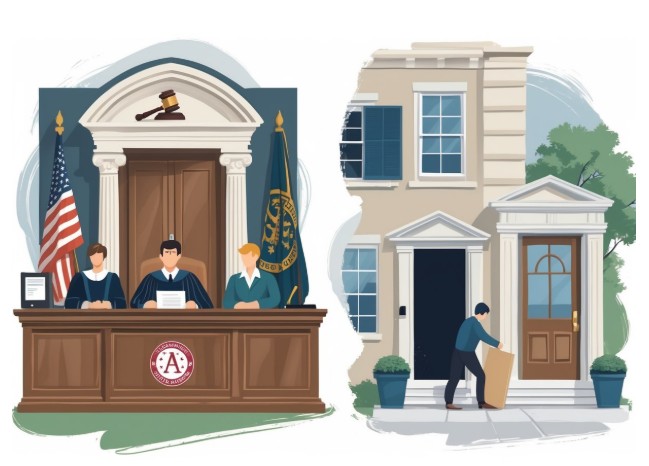
After closing, the correct legal remedy depends on whether the occupant had permission or a lease, claims a right to ownership or possession, or is simply refusing to leave.
Matching the scenario to the right court process protects your timeline and avoids procedural delays.
Holdover Seller Who Won’t Vacate
When a seller won’t leave after closing, it’s a tricky spot. The seller no longer owns the property and has no legal right to stay.
Most sellers who stick around after closing do so without any lease agreement. You generally need to go the ejectment route with a holdover seller.
Eviction is for a tenant’s breach of the lease, which doesn’t fit here. The seller isn’t a tenant unless you set up a post-closing occupancy agreement.
Ejectment lets you get possession back based on your ownership rights. You’ll present your deed and prove that the seller has no right to remain.
This process usually drags out longer than an eviction, but it gets straight to the point about who owns the place.
If you did sign a temporary occupancy agreement, making the seller a tenant, then eviction could apply if they overstay or break the terms.
Tenant Who Stayed After The Sale
If you buy a place with tenants already living there, their original lease terms still stand. You become the new landlord, stepping right into the old owner’s shoes.
The tenant can stay until the lease runs out. You can’t just kick them out because you’re the new owner.
If they pay rent and stick to the lease, they’ve got the right to remain. If they break the lease or stay after it expires, then you’d go for eviction.
Ejectment is about property ownership disputes, while eviction is for landlord-tenant fights. Since a lease exists, eviction is the move here.
Tenants without a written lease—maybe month-to-month or verbal—can still have rights that require you to follow proper eviction steps.
Unauthorized Occupant Or “Squatter”
An unauthorized occupant has no permission to be on your property and has no lease. Squatters fit this description.
Sometimes they’re strangers who slipped in while the place was empty, or people the previous owner let stay without a real agreement.
Unauthorized occupants may require ejectment if they claim a right to remain or ownership. If their occupancy was permission-based, courts may require eviction procedures instead.
Ejectment is for people occupying property without permission.
Your main job is to prove you own the property and the occupant has no legal claim. You’ll need your deed and proof that the person has no lease, no purchase agreement, and no other reason to stay.
Some squatters try to claim adverse possession, but in Alabama, that generally requires long-term, continuous possession—often measured in decades or, in the case of a statutory 10-year period, with additional legal conditions.
Family Member Or Guest Refusing To Leave
Family members or guests of the previous owner can make things messy. Which legal path to take depends on whether they ever had permission to be there and whether they pay anything like rent.
If a family member lived there as a guest, didn’t pay rent, and had no lease, they’re usually not a tenant. Ejectment can remove an adult child or family member living without a formal rental agreement.
You’d go for ejectment if there’s no landlord-tenant relationship. But if a family member pays regular rent to live there, courts might see them as a tenant—even without a written lease. In that case, eviction is the path you’d have to follow.
Guests who refuse to leave after you buy the place have no claim at all. They’re just unauthorized occupants, so ejectment is the way to get your property back.
Which One Applies After Closing? Match the Occupant to the Remedy
| Scenario after closing | What it usually is | Likely remedy (general) | Why it matters |
| Holdover seller won’t leave | The former owner is refusing to vacate | Ejectment | Not typically a tenant; dispute centers on the superior right to possess |
| Tenant remains under lease | Landlord–tenant situation | Eviction | Lease/tenancy governs notice + district court process |
| “Unauthorized occupant” (no lease claimed) | Status unclear | Depends | Must determine if they claim tenancy/permission vs adverse right |
| Family member/guest won’t leave | Permission-based | Eviction (often) | Treated as a permission/tenancy-type removal in many cases |
If you’re facing a holdover seller or surprise occupant, schedule a possession strategy review with Atkinson Law, P.C. before delays and legal costs escalate.
If you’re ready to get started, call us now!
Where Each Case Is Filed And What It Typically Requires

Evictions in Alabama are usually handled in district court with shorter timelines. At the same time, ejectment actions are commonly filed in circuit court and can involve more formal pleadings, evidence of title, and longer resolution periods.
Eviction (Unlawful Detainer) — Court And Typical Timeline
You file eviction cases in district court or a local landlord-tenant court. These courts are set up to quickly resolve landlord-tenant disputes.
The eviction process starts with serving a notice to quit or vacate. Alabama law sets specific notice periods depending on the lease and the violation.
If it’s for non-payment of rent, you usually give seven days’ notice. Other lease violations may require longer notice.
Once the notice period ends, you can file the eviction lawsuit. The court usually schedules a hearing within a week or two. If you win, the judge issues a writ of possession, and law enforcement can remove the tenant.
In uncontested cases, the process can sometimes conclude within a few weeks, but contested cases, service issues, or appeals can significantly extend timelines.
Ejectment — Court And Typical Timeline
Ejectment cases go to circuit court, not landlord-tenant court. Circuit courts handle standard civil cases, which means more formalities and a longer wait.
You’ll file a complaint showing your superior legal title to the property. That complaint needs details about your ownership and proof that the occupant has no right to stay.
Serving a summons must follow Alabama’s civil procedure rules. The defendant gets 30 days to respond after being served.
Discovery, motions, and pre-trial conferences can drag the case out for months. If the facts aren’t in dispute, you might get summary judgment, but if things get messy, you’ll end up at trial.
From start to finish, ejectment cases often take six months to a year—or longer if the court is backed up or the occupant hires an attorney. Title issues can make things even more complicated.
Evidence That Wins Each Case
For eviction (unlawful detainer), you’ll need proof of the tenant-landlord relationship and a solid reason for removal:
- Written lease or rental agreement showing terms
- Records showing the tenant paid rent before
- Proper notice to quit or notice to vacate, plus proof you served it
- Documentation of lease violations—photos, witness statements, written complaints
- Accounting of unpaid rent and payment history
For ejectment, you have to show proof of ownership and superior legal title:
- Recorded deed in your name
- Title insurance policy or title opinion
- Closing documents from the real estate transaction
- Survey showing property boundaries
- Evidence that the occupant has no lease, deed, or any legal right to be there
Witnesses who can talk about the occupancy or any agreements help your case. Photos of the property’s condition and proof of who’s living there can really back you up.
Pre-Closing Protections That Prevent Post-Closing Fights
Most possession disputes are cheaper to solve before closing. Written possession agreements, seller affidavits, and title commitment reviews reduce the chance of inheriting a legal battle after recording the deed.
Require A Seller’s Possession Affidavit At Closing
A seller’s possession affidavit is a sworn document in which the seller confirms that no one else has a right to occupy the property after closing.
It forces the seller to come clean about tenants, family, or anyone else living there before you take over.
Your closing attorney should ask for this affidavit as a standard part of the closing. The affidavit needs to list everyone currently living on the property and state whether they’ll leave by closing or have a lease that will continue after the sale.
If the seller lies and you find someone living there afterward, you’ll have written proof of misrepresentation.
That can really help in court and might even give you a shot at a fraud claim. The affidavit also informs the seller that occupancy issues need to be resolved before the deal closes.
Use A Post-Closing Occupancy Agreement Only With Clear Deadlines
Post-closing occupancy arrangements let the seller stay after closing, but if you don’t draft them carefully, you’re opening yourself up to all kinds of legal risk.
The agreement must spell out a specific move-out date, daily holdover fees, and what happens if things go wrong.
Don’t ever allow post-closing occupancy without a written agreement. If you set up an occupancy arrangement without a valid lease, your options can get messy and expensive.
Essential terms for your post-closing occupancy agreement:
- Specific end date with exact time—no wiggle room
- Daily holdover penalty of $200-500 per day after the deadline
- Security deposit held in escrow until you get full possession
- Right to re-enter if the owner refuses to leave
- No tenancy created language to avoid landlord-tenant headaches
Even if the agreement states no tenancy is created, courts may look at the actual terms and conduct (payment, possession, duration). Have counsel draft this carefully to avoid unintentionally creating a landlord–tenant relationship.
Review Title Exceptions For “Parties In Possession”
Your title commitment will list exceptions to coverage, and one of the big ones is “rights of parties in possession.” This means the title company won’t cover claims from people actually living there.
Before closing, walk the property and check if it’s really vacant or if you know everyone who’s there.
If you spot signs of occupancy—cars, furniture, mail, or lights on—ask the seller to identify who’s living there and their legal status.
Your title company should drop the “parties in possession” exception if the place is truly empty.
If it’s not, the seller needs to show you leases, move-out dates, or proof that eviction is already in progress. Don’t just take their word that “they’ll be gone soon.”
| Red Flag | What To Demand |
| Occupied property at final walkthrough | Written move-out agreement signed by the occupant |
| Mail for the non-seller at the property | Affidavit explaining the occupant’s identity and status |
| Furniture or vehicles present | Proof that the occupant will vacate before closing |
| Utilities in another person’s name | Contact information for the actual occupant |
If you ignore these warning signs, you might face months of litigation just to get someone out who claims tenant rights or even adverse possession. Ask the tough occupancy questions before you sign anything at closing.
What To Do If Someone Refuses To Leave After Closing
If someone won’t leave after closing, you need to move fast—but don’t rush into mistakes. The right legal process depends on whether they’re a tenant, a holdover seller, or just someone with no legal right to be there.
Step 1 — Identify The Occupant’s Legal Status
First, figure out the legal relationship (if any) between you and whoever’s on your property. This tells you which court process you’ll need.
If the occupant isn’t a tenant and never had a lease with you, they fall under ejectment. That includes a seller who stayed past closing, a buyer who moved in early but never bought, or a family member who just won’t budge. These folks aren’t your tenants.
If someone is paying rent or has a lease, they’re a tenant. You have to use the eviction process for them, even if they’re breaking the lease.
Document everything about the occupant’s status. Keep copies of the purchase agreement, closing documents, and any written move-out agreements. Take photos and videos of the property condition right after closing if you can.
Step 2 — Choose The Correct Court Process
Once you know the occupant’s status, file the right legal action in court. If you use the wrong process, you could lose weeks (or months) to delays.
For holdover sellers or unauthorized occupants, file an ejectment action. That’s a civil lawsuit seeking to have someone removed who has no legal right to remain. Ejectment cases can take longer than evictions, but sometimes you don’t have another choice.
For tenants with leases, file an unlawful detainer or eviction lawsuit. This usually goes faster, but only works when there’s a landlord-tenant relationship.
You really should hire an experienced attorney for either process. Real estate law can get weird, and paperwork mistakes can send you back to square one.
Step 3 — Secure Temporary Agreements Or Escrow Holdbacks
Sometimes, you can avoid court by negotiating a move-out date and holding money in escrow. This works best with a seller who needs extra time to move.
Set up a rent-back agreement before closing if you can. That creates a landlord-tenant relationship with clear terms. The seller pays daily rent and agrees to move out by a specific date.
Hold back some of the seller’s money in escrow as security. Make sure it’s enough to cover your costs if they don’t leave on time. Only release the funds after they’re gone and you’ve checked the property.
Get every detail in writing—dates, penalties, and conditions. Don’t rely on handshake deals or promises; they won’t help you in court.
Avoid Lockouts And Utility Shutoffs
Don’t try to force someone out by changing locks, shutting off utilities, or tossing their stuff out. Alabama—and most other states—consider these moves illegal, even if the person staying there really has no right to be there.
If you try a self-help eviction, you could end up in court yourself. The person you’re trying to remove might sue you for illegal eviction, and they could get damages, attorney fees, and even the right to move back in.
You need to use the court system if you want someone off your property. Physical removal is typically carried out by law enforcement pursuant to a court-issued writ of possession or similar order. And that’s only after a judge gives the go-ahead.
If things get tense or the person starts damaging your place, call the police. Otherwise, just file your ejectment or eviction case and wait for the court to handle it—yeah, it’s slow, but it’s the only way that sticks.
Protect your Alabama purchase from post-closing disputes—book a consultation today to confirm the fastest lawful path to possession with Atkinson Law, P.C.
Contact Us Today For An Appointment
Frequently Asked Questions
What’s the difference between ejectment and eviction in Alabama?
Eviction (unlawful detainer) typically removes a tenant or permission-based occupant after their right to possess ends. Ejectment is a broader civil action to recover property from a non-tenant possessor who claims a right to remain, often requiring stronger proof of title and possession.
Can I evict a holdover seller after closing?
Usually, a holdover seller is not a tenant. In many cases, buyers must pursue ejectment to establish the superior right to possession and obtain a court order removing the former owner. The correct remedy depends on how the seller’s post-closing occupancy was documented.
How long does an eviction take in Alabama?
Evictions are generally faster than ejectments because they are typically handled in district court and focus on ending a tenancy or a permission-based right to possession. Timing still depends on notice requirements, court scheduling, and whether the tenant contests the case.
How long does ejectment take in Alabama?
Ejectment actions are commonly filed in circuit court and may take longer because they can involve proof of superior title/possession rights and more formal litigation steps. Contested cases can extend significantly depending on the evidence and court timelines.
What if the occupant claims there’s a lease after I buy the property?
If a valid lease exists, the buyer may step into the seller’s role as landlord. That typically points toward eviction/unlawful detainer procedures and lease-based notice requirements. A fast resolution starts with getting the lease terms in writing immediately.
Can I change the locks or shut off utilities to make them leave?
No. Self-help removal can create legal liability and delay your ability to regain possession in court. The safer approach is to identify the occupant’s status and use the appropriate court process—eviction or ejectment—to obtain lawful possession.
How do I prevent this before closing?Require written vacancy terms, obtain a seller possession affidavit, confirm possession at the final walkthrough, and use escrow holdbacks when possession is uncertain. Pre-closing controls are usually cheaper and faster than litigating possession after recording.